
WUDU · RITUAL PURIFICATION
How do I perform wudu?
Islamic Ablution Before Prayer — 13 Steps, Simply Explained
O believers! When you rise up for prayer, wash your faces and your hands up to the elbows, wipe your heads, and wash your feet to the ankles.
What is wudu?
Purity before prayer
"Wudūʾ, or ritual ablution, is far more than just physical cleansing. It is a traditional ritual that Muslims perform to achieve both physical and spiritual purity. Traditionally, wudūʾ symbolizes the conscious mental and physical preparation for prayer (Salāt/Tholugai), one of the five pillars of Islam.
The 13 Steps of Wudu
Follow the steps in order—from the intention to the closing prayer.
The Guide to Wudu الوُضُوء
Ritual purification before prayer — explained step by step.

Form the intention in your heart to perform ritual ablution (wudu) for prayer. It does not need to be spoken aloud.

Say “In the name of Allah” before beginning wudu. The Prophet ﷺ said: “There is no wudu for one who does not mention Allah’s name.”
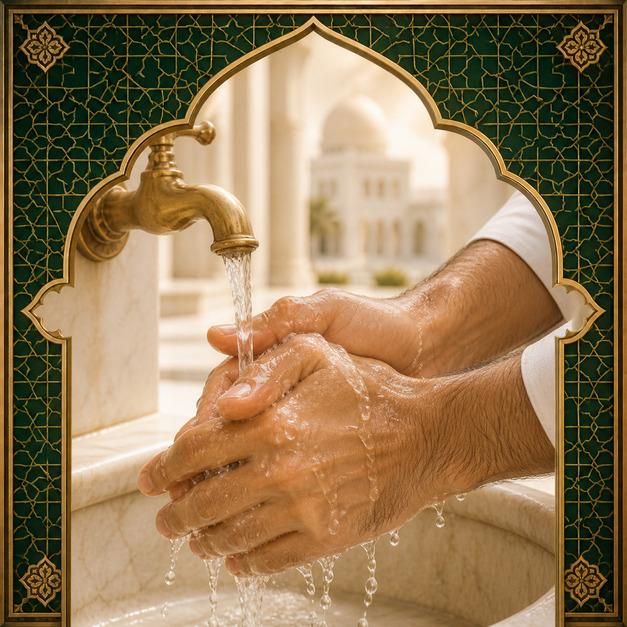
Wash both hands up to the wrists, interlacing your fingers to clean between them. Start with your right hand.
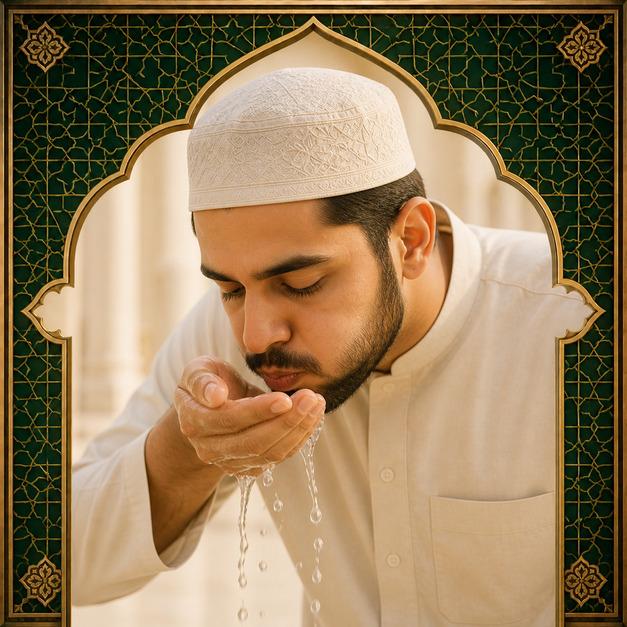
Take a mouthful of water, swish it around thoroughly, and spit it out. Be sure to clean every corner of your mouth.
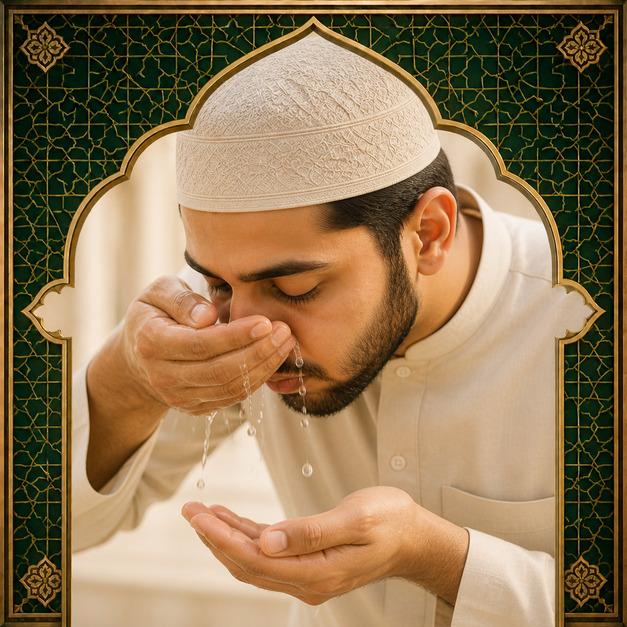
Use your right hand to draw water into your nose (sniff it in) and use your left hand to blow it out. Do this thoroughly and deeply into both nostrils.
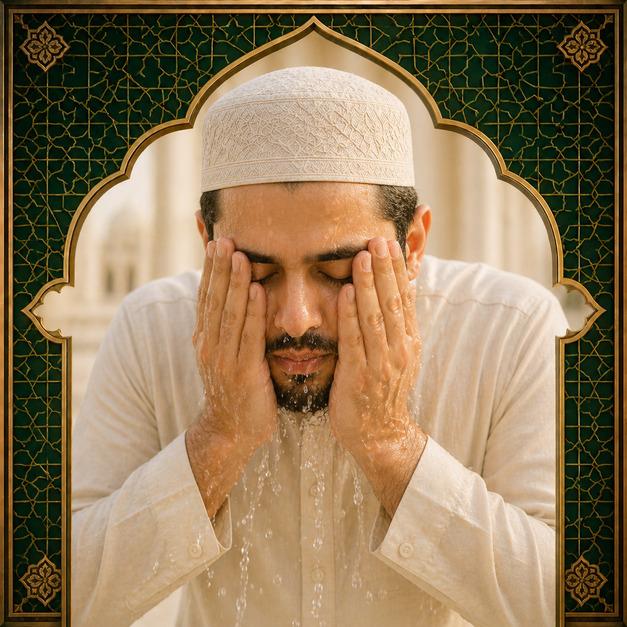
Wash your entire face—from your hairline to your chin and from one earlobe to the other. Run your fingers through your beard.
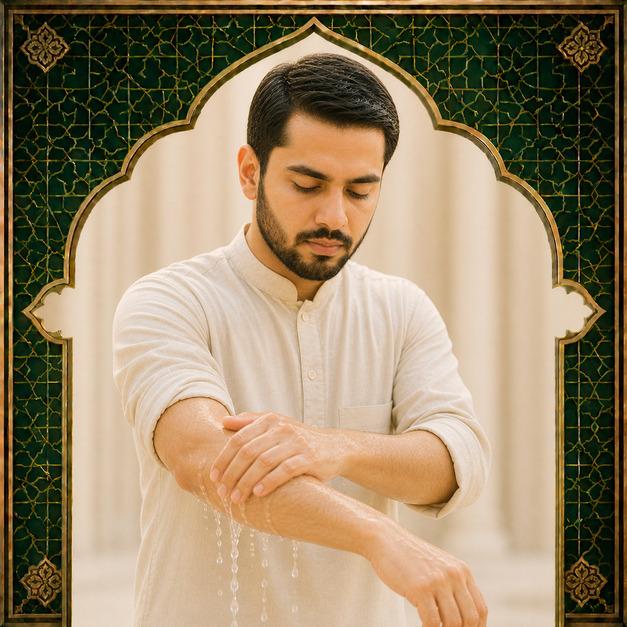
Wash your right arm up to and including the elbow. Use your left hand to spread the water over your arm. Make sure no dry spots remain.
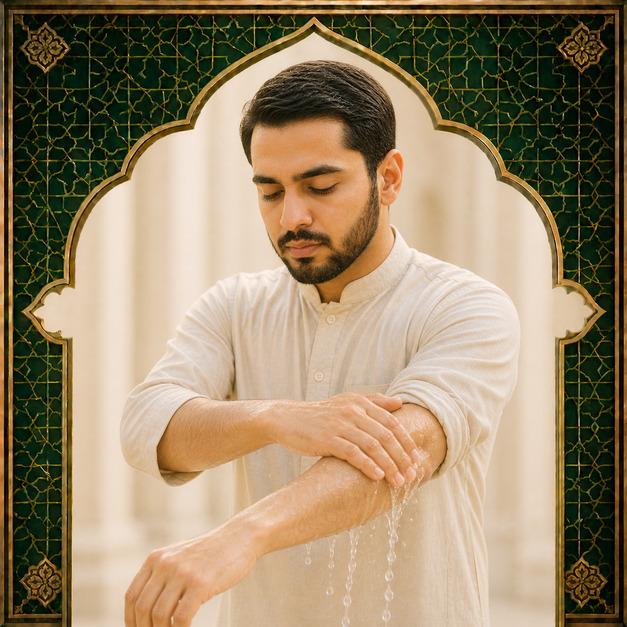
Repeat the same step with your left arm—washing up to and including the elbow. Use your right hand to spread the water.
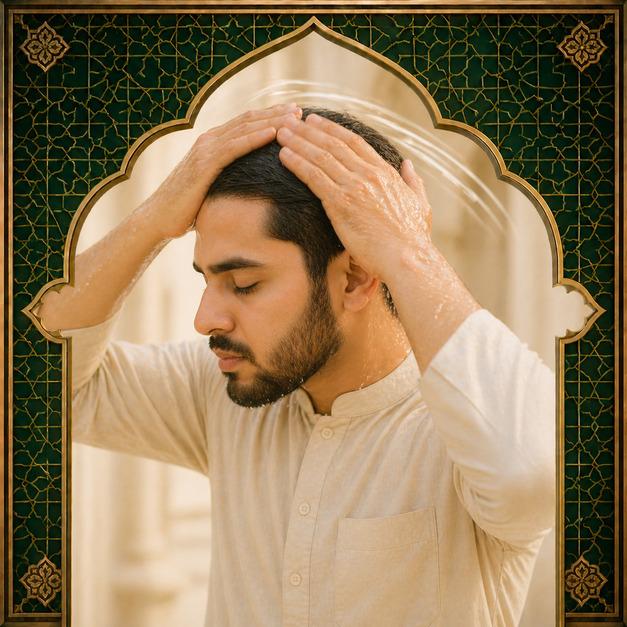
Run both wet hands over your head—from your forehead to the back of your head and back. Just once, not three times.
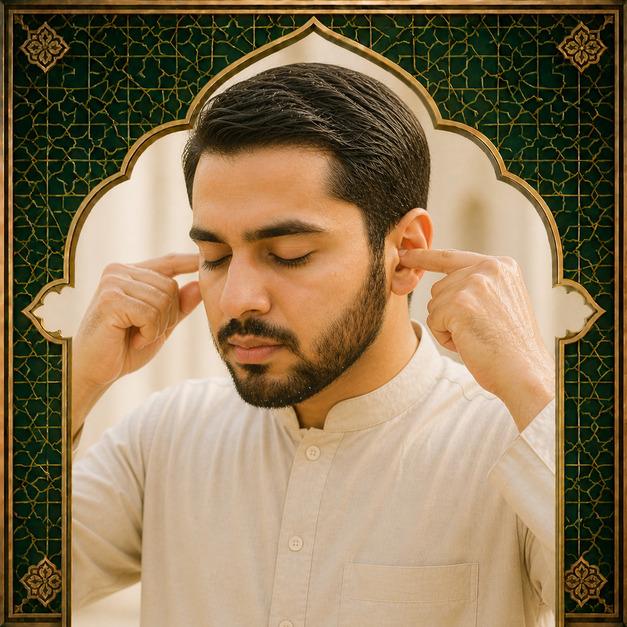
Use your index fingers to wipe the inside of your ears and your thumbs to wipe the outside. Use the same water you used for your head.
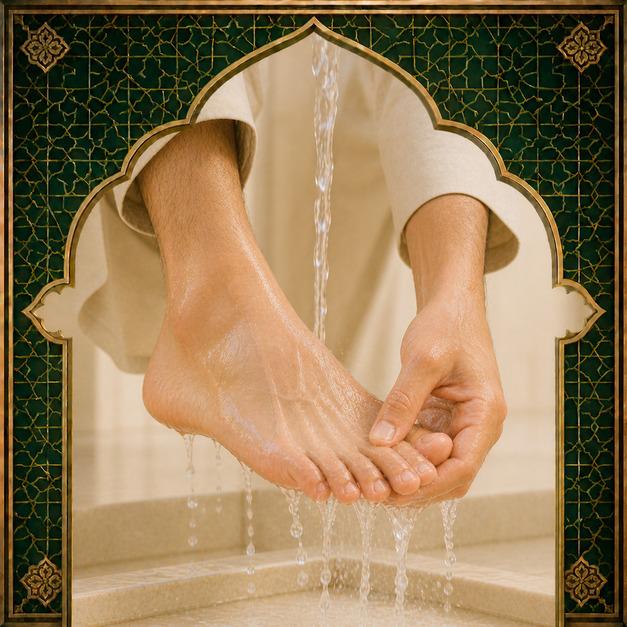
Wash your right foot, including the ankle. Use your little finger to slide between each toe to clean every area.
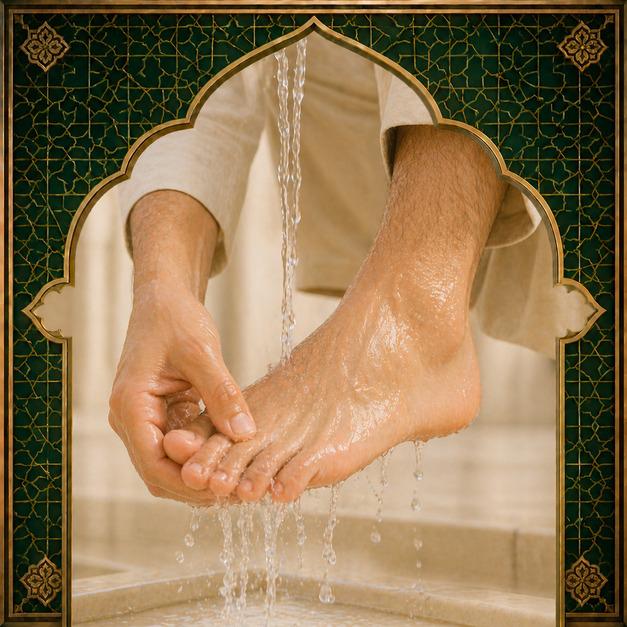
Repeat the same step with your left foot—up to and including the ankle. Slide your little finger between each toe.
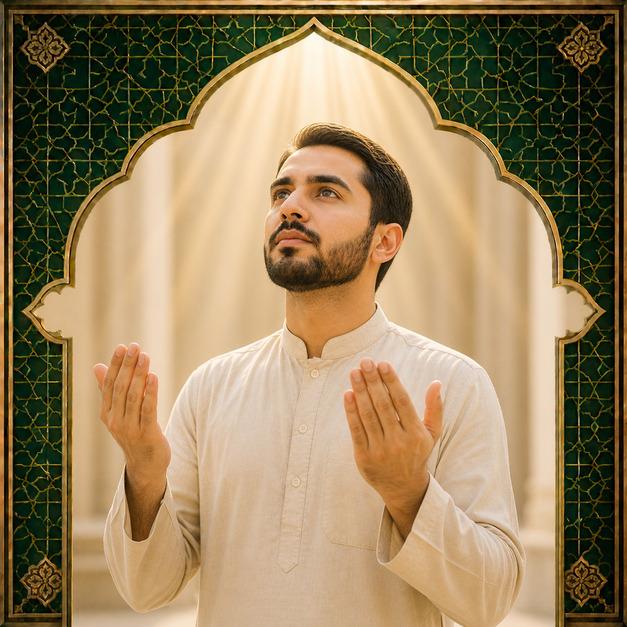
After performing wudu, say: “Ashhadu an la ilaha illallah, wa ashhadu anna Muhammadan abduhu wa rasuluh.” All eight gates of Paradise will open.
Important Information - What You Need to Know
When is wudu required?
Before each of the five daily prayers, before touching the Quran, and before Friday prayers. Once performed, wudu remains valid as long as it is not invalidated.
What invalidates wudu?
Using the restroom, falling into a deep sleep, losing consciousness, laughing heartily during prayer, and touching one’s genitals. After performing any of these actions, wudu must be renewed.
What if there is no water available?
If water is not available or in the event of illness, Islam permits tayammum (التيمم)—ritual purification using clean dust or soil.
Is performing wudu after sexual intercourse sufficient?
After sexual intercourse, wudu is not sufficient to resume prayer. Another form of purification must be performed in this case, known as ghusul – eine rituelle Ganzkörperwaschung.
The Virtue of Purity
“Whoever performs wudu properly, their sins will leave their body—even from under their fingernails.”
— Sahih Muslim · Hadith 245
يَـٰٓأَيُّهَا ٱلَّذِينَ ءَامَنُوٓا۟ إِذَا قُمْتُمْ إِلَى ٱلصَّلَوٰةِ فَٱغْسِلُوا۟ وُجُوهَكُمْ وَأَيْدِيَكُمْ إِلَى ٱلْمَرَافِقِ وَٱمْسَحُوا۟ بِرُءُوسِكُمْ وَأَرْجُلَكُمْ إِلَى ٱلْكَعْبَيْنِ ۚ وَإِن كُنتُمْ جُنُبًۭا فَٱطَّهَّرُوا۟ ۚ وَإِن كُنتُم مَّرْضَىٰٓ أَوْ عَلَىٰ سَفَرٍ أَوْ جَآءَ أَحَدٌۭ مِّنكُم مِّنَ ٱلْغَآئِطِ أَوْ لَـٰمَسْتُمُ ٱلنِّسَآءَ فَلَمْ تَجِدُوا۟ مَآءًۭ فَتَيَمَّمُوا۟ صَعِيدًۭا طَيِّبًۭا فَٱمْسَحُوا۟ بِوُجُوهِكُمْ وَأَيْدِيكُم مِّنْهُ ۚ مَا يُرِيدُ ٱللَّهُ لِيَجْعَلَ عَلَيْكُم مِّنْ حَرَجٍۢ وَلَـٰكِن يُرِيدُ لِيُطَهِّرَكُمْ وَلِيُتِمَّ نِعْمَتَهُۥ عَلَيْكُمْ لَعَلَّكُمْ تَشْكُرُونَ
"Qur’an 5:6 (Surah Al-Ma’idah, Ayah 6)"
O ihr, die ihr glaubt, wenn ihr euch zum Gebet erhebt, dann wascht eure Gesichter und eure Hände bis zu den Ellenbogen, und streicht über eure Köpfe, und (wascht) eure Füße bis zu den Knöcheln.
Und wenn ihr im Zustand der großen Unreinheit seid, dann reinigt euch.
Wenn ihr aber krank seid oder auf Reisen oder einer von euch vom Verrichten der Notdurft kommt oder ihr Frauen berührt habt und kein Wasser findet, dann sucht reine Erde und streicht euch damit über eure Gesichter und eure Hände.
Allah will euch keine Erschwernis auferlegen, sondern Er will euch reinigen und Seine Gunst an euch vollenden, auf dass ihr dankbar seid.
"Qur’an 5:6 (Surah Al-Ma’idah, Ayah 6)"
O believers! When you rise up for prayer, wash your faces and your hands up to the elbows, wipe your heads, and wash your feet to the ankles. And if you are in a state of ˹full˺ impurity,1 then take a full bath. But if you are ill, on a journey, or have relieved yourselves, or have been intimate with your wives and cannot find water, then purify yourselves with clean earth by wiping your faces and hands.2 It is not Allah’s Will to burden you, but to purify you and complete His favour upon you, so perhaps you will be grateful..
"Qur’an 5:6 (Surah Al-Ma’idah, Ayah 6)"
Wudu and Ablution: Tips for Proper Prayer Ablution
Die rituelle Reinheit (Tahara) ist die Grundvoraussetzung für das Gebet (Salat). Hier findest du wichtige Hinweise zur Vorbereitung, Durchführung und zu Ausnahmeregelungen wie dem Tayammum.
The Proper Way to Perform Wudu
-
Mentale Einstimmung: Leere deinen Geist vor dem Wudu, um dich voll und ganz auf die Absicht (Niyya) und die Konzentration auf Allah zu fokussieren.
-
Körperliche Erleichterung: Es ist ratsam, vor der Waschung die Toilette aufzusuchen. So verhinderst du, dass der Drang zur Entleerung das Wudu oder die Konzentration im Gebet unterbricht.
-
Zahnhygiene: Der Prophet (Friede sei mit ihm) pflegte sich vor jedem Wudu die Zähne zu reinigen (Miswak), um mit vollkommener Reinheit vor Allah zu treten.
Procedure and Rules for Ritual Ablution
-
Reihenfolge (Tartib): Alle Schritte müssen zwingend in der korrekten Abfolge und ohne lange Unterbrechungen durchgeführt werden.
-
Besonderheit beim Nacken: Wische dir einmal mit dem feuchten Handrücken über den Nacken, bevor du mit der Waschung der Füße fortfährst.
-
Umgang mit Verletzungen: Falls du eine Armschiene tragen musst, wasche den Arm so weit wie möglich oberhalb der Schiene.
Exceptions and Exemptions
-
Tayammum (Trockenreinigung): Wenn kein Wasser verfügbar ist oder eine Krankheit die Waschung mit Wasser verhindert, ist das Tayammum vorgesehen. Hierbei erfolgt die rituelle Reinigung symbolisch mit sauberem Staub, Erde oder Sand.
-
Gebet bei körperlicher Einschränkung: Wenn langes Stehen (z. B. altersbedingt) nicht möglich ist, darf der Salat im Sitzen auf einem Stuhl verrichtet werden. Ein Gebetsteppich (Sali) unter den Füßen sorgt dabei für die nötige Sauberkeit.
Useful Links